How protein works for plant-based
Plant protein is not incomplete. It is unbalanced, which is a different problem with a much better solution.
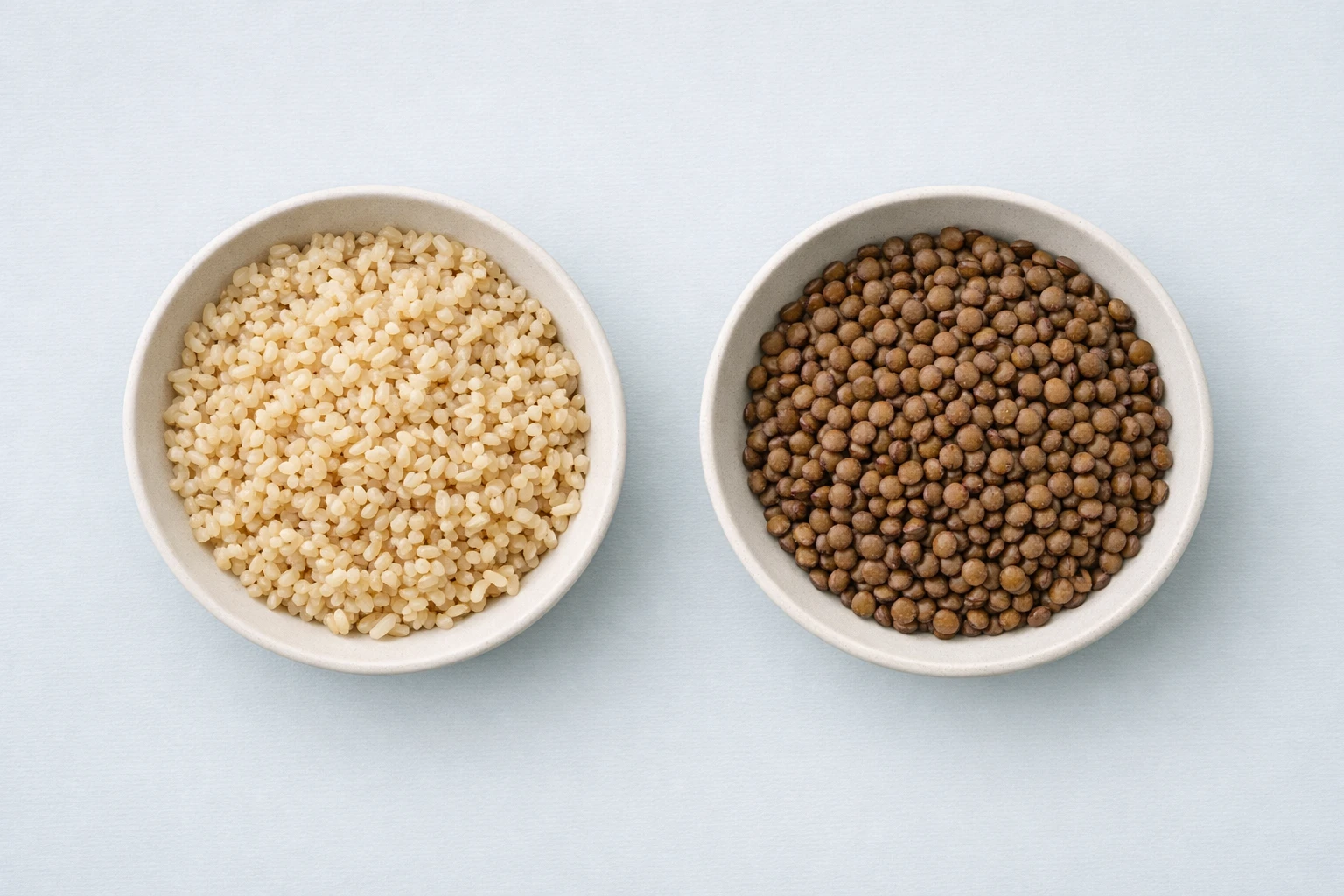
Grains run low in lysine. Legumes run low in the sulphur amino acids. Each one covers the other's gap almost exactly.
How your body actually uses it
Every plant food contains all twenty amino acids. The phrase incomplete protein has caused thirty years of confusion by implying otherwise. What it actually means is that plant proteins carry the nine essentials in ratios further from human requirements than animal proteins do, so one of them runs out first and caps what the rest can build.
That capped fraction is not wasted in an interesting way, either: the surplus amino acids are deaminated and burned. So a plant-based diet with a poor mix does not just fall short, it converts good food into expensive calories on the way.
What most people here get wrong
You must combine proteins within the same meal
This is the big one, and it is wrong. The free amino acid pool buffers across hours, so same-day complementation is largely sufficient. Rice at lunch and beans at dinner still complement each other. Same-meal pairing is a convenience and a good habit, not a rule, and the guilt it generates has driven people away from a perfectly workable diet.
Protein powder solves it
It depends entirely on which powder. Pea protein is lysine-rich and modest on the sulphur amino acids; rice protein is the reverse. Blends exist precisely because the single-source ones have the same gaps as the foods they came from.
Seitan is a protein powerhouse
Seitan is wheat gluten at roughly 25 g of protein per 100 g, and it inherits wheat's lysine poverty exactly. A seitan-heavy day can post an impressive protein total and still be lysine-limited. It is the clearest case in the whole database of a number that lies.
Plants cannot build muscle
They can, demonstrably. It takes larger portions, because plant foods are less protein-dense, and it takes attention to which line runs short. Those are logistics, not a ceiling.
The amino acid angle
Two lines do almost all the work. Lysine is the one a grain-centric day runs short of, and it is the most common limiting line on plant-based diets by a wide margin. The sulphur amino acids, methionine and cysteine pooled, are the mirror image: they catch the person eating beans and lentils with little grain or seed.
Almost every traditional plant-based cuisine is built on a pairing that solves one of those two. Rice and beans, dal and rice, hummus and pita, beans on toast, tofu and rice. None of them were designed with a requirement table. All of them work.
The playbook
- Anchor most days on legumes. They are the lysine supply, and lysine is the line that runs short first.
- Pair across the day rather than agonising within the meal. Grains and seeds cover the sulphur side; legumes cover lysine.
- Treat seitan as a wheat product with a high protein number, not as a protein source in its own right.
- Soy is the exception that makes life easier: it is close to complete on its own, which is why tofu, tempeh and edamame do so much heavy lifting on this diet.
- Eat more total protein than an omnivore would target for the same goal. Lower digestibility and a less favourable mix both cut into the usable fraction.
Where AminoLens comes in
This is the case AminoLens was built for. Photograph the plate, and the Sankey shows which line the meal actually runs out on, then the recommender suggests a food that closes the gap without breaking your diet. No combining table, no folklore, no guessing whether today's version of rice and beans hit the ratio.
See where your own protein goes
One photo. All nine lines. The one that is holding the rest back.
Analyse a meal