AminoLens

Protein isn't a number. It's a mixture.

Snap a photo of your meal. AminoLens breaks it down into all nine essential amino acids, shows which one is holding your protein back, and tells you exactly what to add.

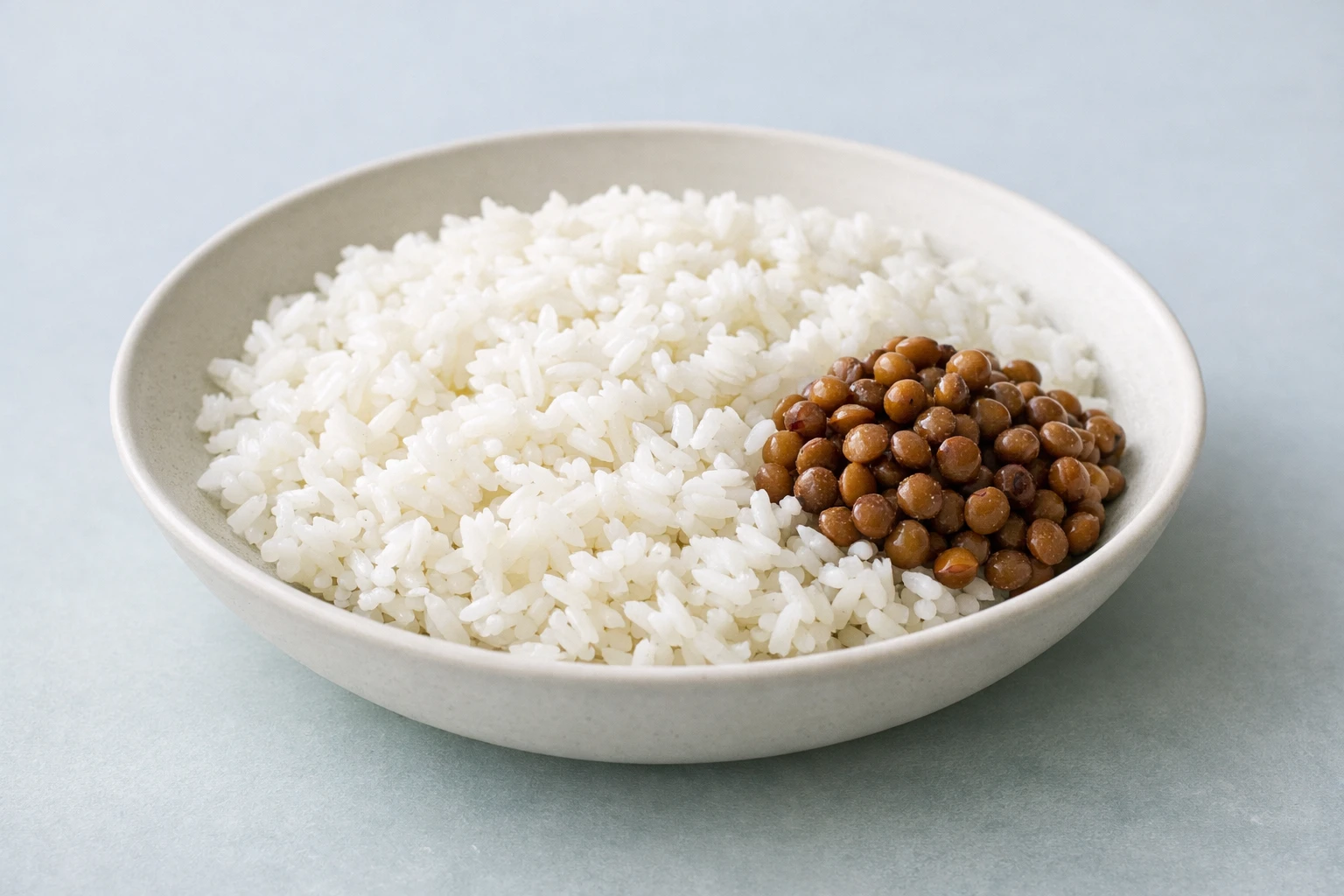
A wide bowl of plain white rice with a small spoonful of brown lentils to one side.
One photo in
Where one meal's protein goes, amino acid by amino acid250 g white rice, cooked and 60 g lentils, cooked. Lysine runs out first, so this plate builds 11.62 g of body protein and every other amino acid has some left over.What you ateNine essentialsWhat it buildsWhite rice, cooked to Histidine: 137 mg, 79% of the lineWhite rice, cooked to Isoleucine: 252 mg, 72% of the lineWhite rice, cooked to Leucine: 485 mg, 71% of the lineWhite rice, cooked to Lysine: 213 mg, 41% of the lineWhite rice, cooked to Methionine + cysteine: 257 mg, 100% of the lineWhite rice, cooked to Phenylalanine + tyrosine: 502 mg, 114% of the lineWhite rice, cooked to Threonine: 209 mg, 78% of the lineWhite rice, cooked to Tryptophan: 67 mg, 97% of the lineWhite rice, cooked to Valine: 359 mg, 79% of the lineLentils, cooked to Histidine: 125 mg, 72% of the lineLentils, cooked to Isoleucine: 190 mg, 55% of the lineLentils, cooked to Leucine: 322 mg, 47% of the lineLentils, cooked to Lysine: 310 mg, 59% of the lineLentils, cooked to Methionine + cysteine: 97 mg, 38% of the lineLentils, cooked to Phenylalanine + tyrosine: 337 mg, 76% of the lineLentils, cooked to Threonine: 158 mg, 59% of the lineLentils, cooked to Tryptophan: 40 mg, 58% of the lineLentils, cooked to Valine: 220 mg, 49% of the lineHistidine: coveredHistidine: surplusIsoleucine: coveredIsoleucine: surplusLeucine: coveredLeucine: surplusLysine: coveredMethionine + cysteine: coveredMethionine + cysteine: surplusPhenylalanine + tyrosine: coveredPhenylalanine + tyrosine: surplusThreonine: coveredThreonine: surplusTryptophan: coveredTryptophan: surplusValine: coveredValine: surplusWhite rice, cooked250 gLentils, cooked60 gHisIleLeuLyslimiting - all 11.62 g usedSAAAAAThrTrpValBuilt into proteinSurplus, used for energy
Worked example: 250 g cooked rice with 60 g cooked lentils. Those 12.14 g of protein build 11.62 g of body protein, because lysine runs out first — the only line with nothing left over. AAA alone would have carried 22.08 g. Computed by the same engine the app runs on.
  • Histidine: supports 17.47 g
  • Isoleucine: supports 14.76 g
  • Leucine: supports 13.67 g
  • Lysine: supports 11.62 g (limiting - all of it is used)
  • Methionine + cysteine: supports 16.09 g
  • Phenylalanine + tyrosine: supports 22.08 g
  • Threonine: supports 15.94 g
  • Tryptophan: supports 17.96 g
  • Valine: supports 14.85 g

Add 40 g of food

  1. Spirulina10 g+5.03 g protein
  2. Soybeans, cooked15 g+3.37 g protein
  3. Pumpkin seeds15 g+3.31 g protein

Buildable protein 11.62 g → 23.28 g, for 40 g of food.

And the macros follow

  • Protein13% → 18%
  • Fat2% → 17%
  • Carbohydrate85% → 64%

Rice and lentils alone is 85% carbohydrate and 2% fat. The same additions that unlock the protein pull both back towards their usual ranges.

The gram count is lying to you

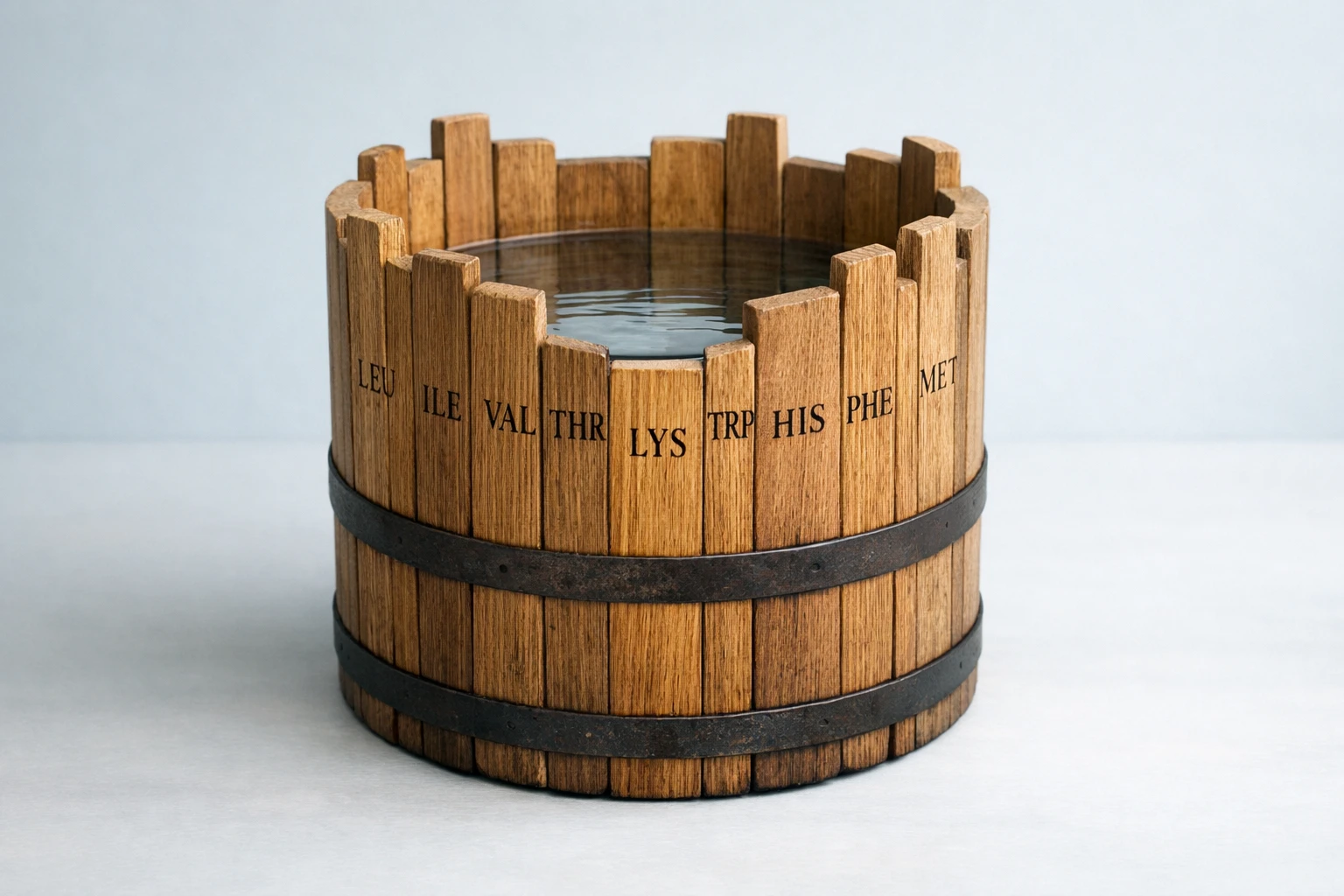
Every tracker on earth tells you how many grams of protein you ate. None of them tell you whether your body can actually use it. Protein synthesis runs at the speed of your scarcest essential amino acid: pile up 120 g of protein with too little lysine and the surplus is simply burned as calories. It's the barrel-stave problem: the shortest stave sets the water line.

  • Vegans and vegetarians: plant proteins are individually incomplete. The classic pairings (rice + beans) work, but only if you actually hit the ratios.
  • Athletes: muscle protein synthesis needs a leucine trigger per meal, not just a daily total.
  • Everyone: more expensive protein isn’t better protein if the mix is wrong.
An oak vat whose staves are cut to many different heights, each branded with the three-letter code of an essential amino acid. The stave marked LYS is the shortest, and the water inside rests exactly level with its top edge while every taller stave stands dry above the water line.
The shortest stave sets the water line.

How it works

  1. Snap

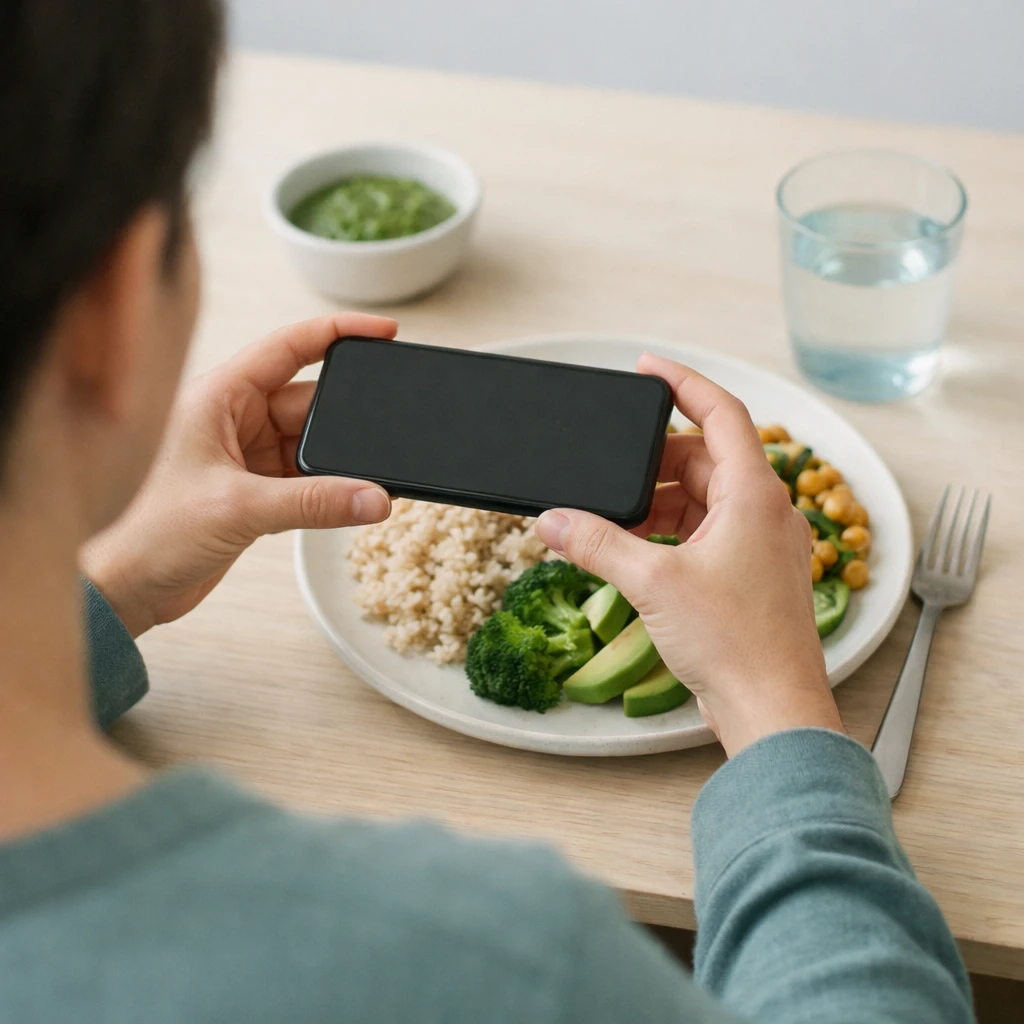
    Photograph your plate. Our AI identifies each food and estimates portions. You confirm with one tap.

  2. See

    Watch your meal flow into the nine essential amino acids. Green means covered. Red means limiting.

  3. Fix

    Get suggestions that fit your diet: “Add 150 g of lentils and your lysine gap closes.” Vegan-aware, allergy-aware, no nonsense.

Seen over someone's shoulder, a phone held flat above a plate of grains and vegetables, about to take the photo.

What you get

The Sankey view

The signature. Foods on the left, amino acids in the middle, your requirements on the right. One glance shows where every gram goes and what’s missing. No table of numbers has ever done that.

Your limiting amino acid

The single number that matters. We compute your effective usable protein: the protein your body can actually build with, given your weakest link.

Built for your diet

Vegan, vegetarian, pescatarian, allergies. Suggestions never break your rules. Complementation, done for you.

Tuned to your body

Requirements scaled by your weight, age and training load, based on WHO/FAO reference patterns and sports nutrition research. Not one-size-fits-all RDAs.
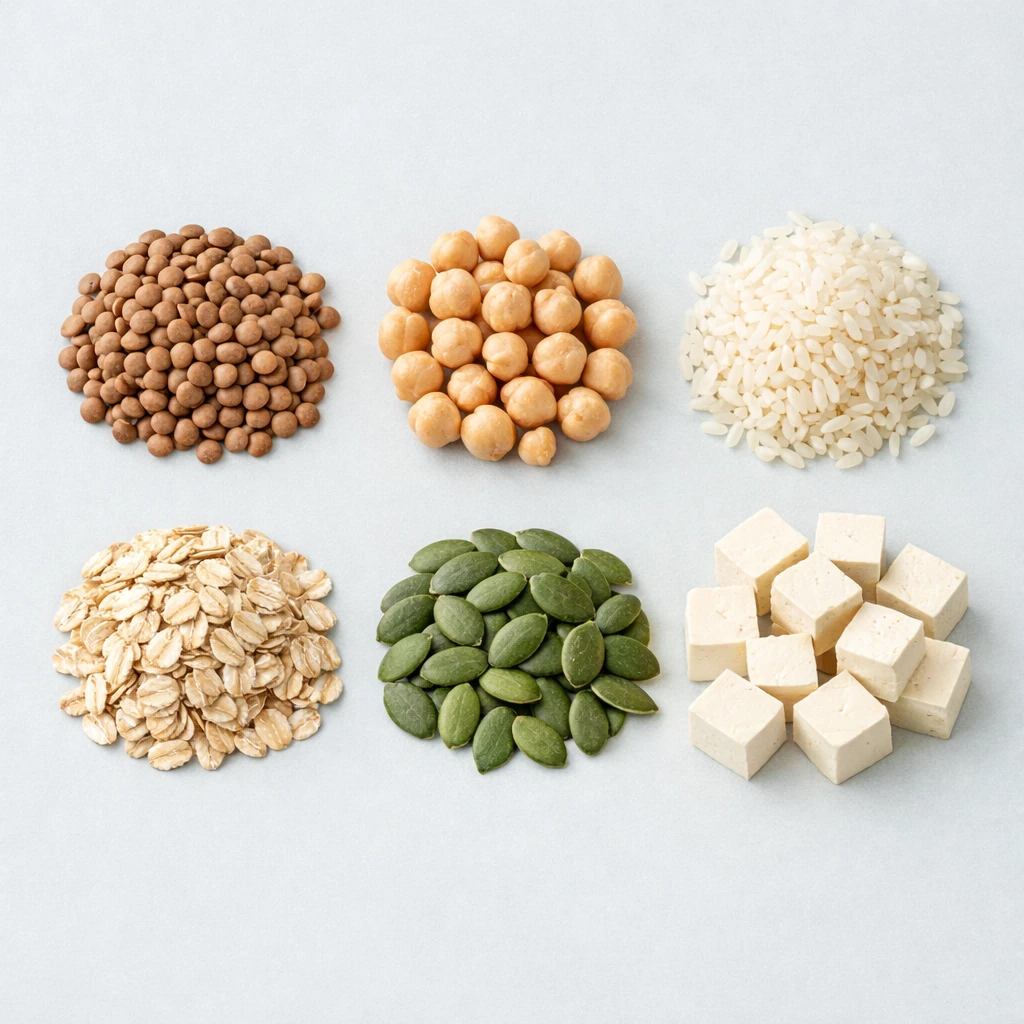
Small separate piles of lentils, chickpeas, rice, oats, pumpkin seeds and tofu laid out in a grid like specimens.
Complementation, done for you.
  • Based on WHO/FAO/UNU amino acid requirement patterns
  • Amino acid data from USDA FoodData Central

Stop guessing. Start completing.

Your next meal is one photo away from making sense.

We use analytics to understand how the app is used. Meal photos and your profile are never shared with advertisers.