
How protein works for fat loss
On a cut, protein is the nutrient that decides whether you lose fat or lose muscle.
Protein has the highest thermic effect of any macronutrient: roughly 20 to 30% of its calories are spent digesting and processing it.
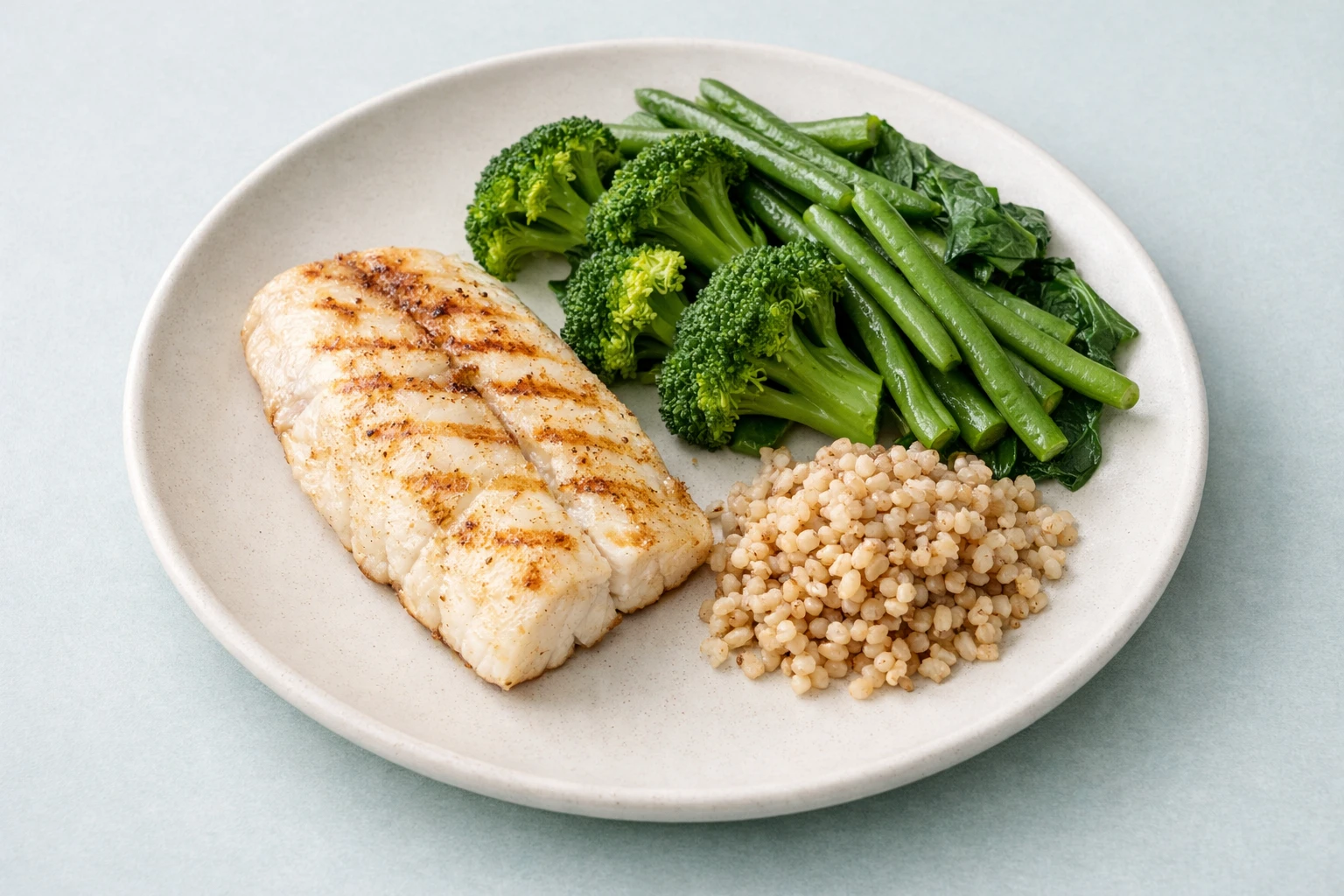
How your body actually uses it
In a calorie deficit your body needs energy it is not being given, and it will take some of that energy from its own protein. Muscle is the most convenient donor.
Dietary protein defends against that in three separate ways. It supplies amino acids so your body has an alternative to cannibalising muscle. It has the highest thermic effect of the three macronutrients, so a slice of its calories is spent on its own processing. And it is the most satiating macronutrient per calorie, which makes the deficit itself easier to hold.
What most people here get wrong
Cutting calories and protein together
The single most common mistake on this page. A deficit plus low protein is the recipe for maximal muscle loss, and it produces the outcome people describe as skinny fat: a smaller version of the same body composition, or a worse one.
Believing high protein damages healthy kidneys
This is not supported for healthy people. It is worth saying plainly because the fear costs people muscle. It is equally worth saying that if you have kidney disease, this is a conversation for your clinician and not for a website. We do not give advice for medical conditions.
Counting only calories
Two 400 kcal meals with identical protein grams can deliver very different amounts of usable protein if the amino acid mix differs. On a tight calorie budget, wasted protein hurts twice: you paid the calories and you did not get the building.
The amino acid angle
When every calorie is spoken for, protein efficiency is the whole game. The limiting amino acid principle means you can hit your gram target exactly and still under-supply synthesis, and in a deficit there is no spare capacity to absorb that waste.
The leucine threshold does not shrink to match your calorie budget either. The badge fires at a flat 2.5 g for everyone, in a deficit or out of one. Clearing it on fewer calories means choosing leucine-dense foods rather than simply eating more of what you were eating.
The playbook
- Set the lose-weight goal and the app targets 1.6 g/kg/day.
- Research supports pushing higher, up to roughly 2.4 g/kg, for leaner people in steeper deficits. The app does not apply that automatically, so if that describes you, raise your own target deliberately.
- Protein at every meal, not banked for dinner.
- Resistance training is not optional here. It is the signal that tells your body which tissue to keep.
- Favour high protein-per-calorie foods: the cheaper the protein is in calories, the more of your budget is left for everything else.
- Check your mix, not just your macros. This is the part a calorie app cannot do for you.
Where AminoLens comes in
The gap between consumed protein and effective usable protein is the number to watch on a cut. Wasted protein is the most painful figure in the app when calories are scarce, which is precisely what makes it the most motivating one.
See where your own protein goes
One photo. All nine lines. The one that is holding the rest back.
Analyse a meal