
How protein works for healthy ageing
After 50, your muscles stop listening to protein. Speak louder.
Older muscle needs roughly 30 to 40 g of complete protein in a meal to trigger the same building response that 20 to 25 g produces in a younger body.
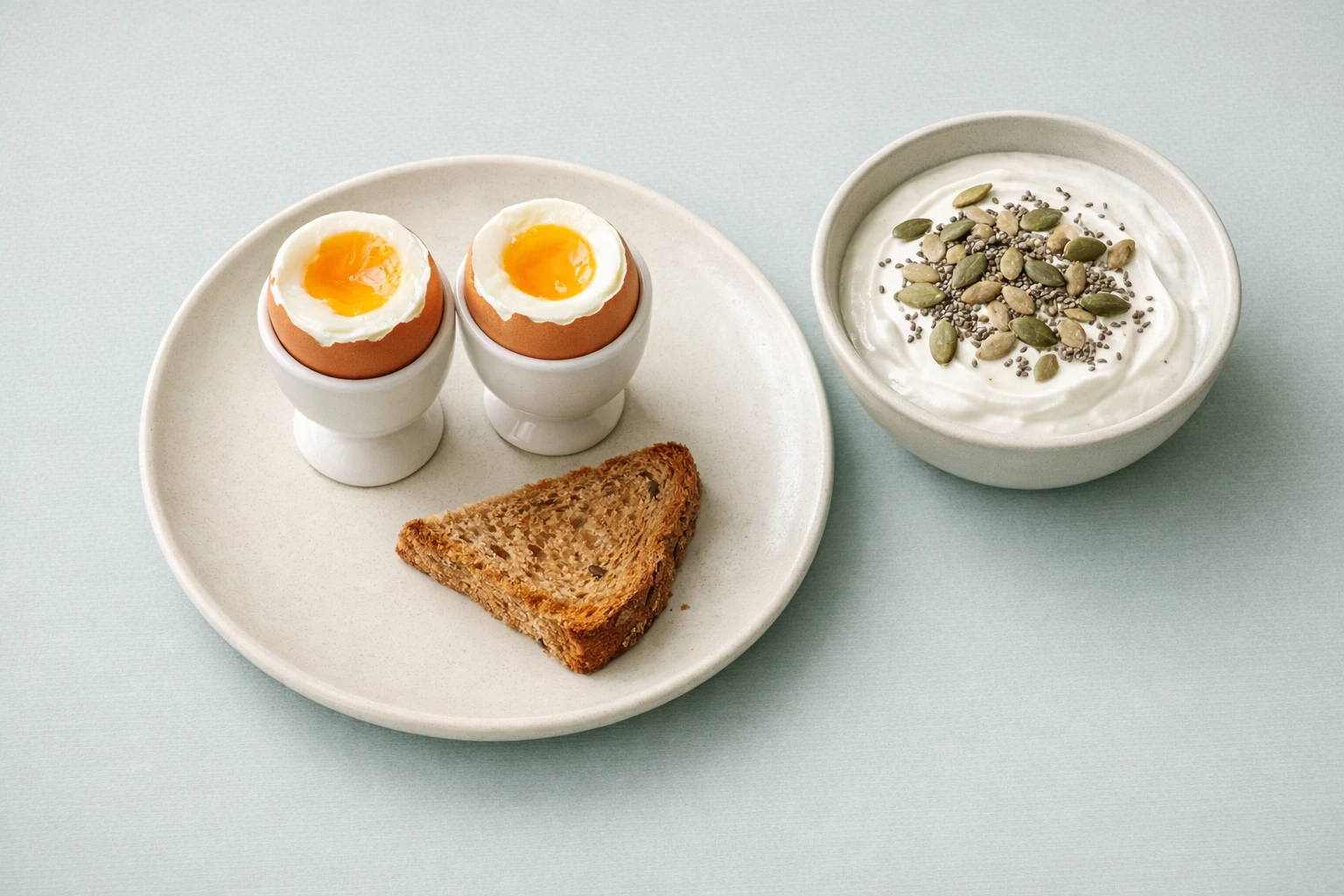
How your body actually uses it
The mechanism has a name: anabolic resistance. The same dose of protein produces a smaller synthesis response in older muscle than in younger muscle, so the per-meal threshold to start a build rises with age.
That would be manageable on its own. It arrives alongside a declining appetite, which means the threshold goes up exactly as the portions go down. Between those two, gradual muscle loss is the default trajectory rather than an unlucky outcome, and it has to be actively resisted rather than merely avoided.
What most people here get wrong
Eating less protein exactly when you need more
Appetite falls, meals get smaller and lighter, and protein is usually the first thing to go because it is the part of the plate that takes effort. The requirement moved in the opposite direction.
The tea-and-toast breakfast
A breakfast with almost no protein never approaches the synthesis threshold, so the first third of the day contributes nothing to building. Two of three meals doing nothing is a large deficit, whatever the daily total says.
Assuming walking is enough
Walking is excellent and it is not a muscle-retention strategy. Muscle responds to resistance, and without that signal the protein has nothing to be spent on.
The amino acid angle
With fewer total calories and a smaller appetite, protein quality per bite becomes the operative constraint. Leucine density in particular turns into the food selection criterion, because it decides whether a meal starts a build at all.
One caveat we would rather state than hide: the AminoLens leucine badge uses the same 2.5 g threshold at every age. It does not know about anabolic resistance. For this audience, read a cleared badge as the minimum rather than the job done.
The playbook
- Treat 1.2 g/kg/day as a floor. The app applies that automatically from age 65.
- Front-load protein at breakfast. This is the single highest-value change on the page.
- Clear the leucine trigger at every feeding, not only at dinner.
- Resistance training twice weekly. It does not need to be a gym, and it does need to be resistance.
- Keep it food-first. Supplements are a fallback for when appetite genuinely will not stretch, not a starting point.
Where AminoLens comes in
Set your age band in the profile and the daily target moves to 1.2 g/kg automatically from 65. The per-meal view is the more useful one day to day: it shows whether breakfast did anything at all, which is the question this audience most needs answered.
See where your own protein goes
One photo. All nine lines. The one that is holding the rest back.
Analyse a meal