
How protein works for keto and low-carb
On keto, protein walks a tightrope. Amino acids help you keep your balance.
With carbohydrate near zero, gluconeogenesis runs continuously, and some of your protein intake is always being diverted to make glucose.
How your body actually uses it
Your brain has a residual glucose requirement that ketones do not fully replace. With carbohydrate near zero, your body meets it through gluconeogenesis: manufacturing glucose, substantially from amino acids. So on keto a portion of your protein intake is permanently taxed on the way in.
That fact spawned the fear that eating too much protein will kick you out of ketosis. In practice gluconeogenesis is demand-driven rather than supply-driven: your body makes roughly the glucose it needs rather than converting everything you send it. Moderate-to-high protein is compatible with ketosis for most people. We are saying that plainly because the keto community over-restricts protein and it costs them muscle.
What most people here get wrong
Fearing protein into a low-protein, high-fat diet
The predictable end point of the ketosis worry is a diet that is mostly fat, adequate in calories and short on protein. That is a lean mass problem dressed up as a metabolic strategy.
Assuming keto means meat means amino acids sorted
A keto diet built on cheese, cream, butter and bacon can be surprisingly mediocre on amino acids per calorie. Fatty and processed cuts dilute protein density, and collagen-heavy cuts skew the mix rather than filling it out. Keto is a macronutrient rule, not a protein quality guarantee.
Treating vegetarian keto as merely difficult
It is genuinely hard for amino acid coverage, because it excludes most legumes and grains, which are exactly the plant foods that carry lysine and bulk protein. This is arguably the single situation where AminoLens earns its keep fastest.
The amino acid angle
Because part of your intake is siphoned off to make glucose, the effective amino acid supply available for building is lower than the label suggests. Getting a complete mix matters more, not less, when a slice is being taxed off the top.
The practical consequence: on keto, protein quality per gram deserves more attention than it usually gets, and the foods that carry the fat are frequently not the foods carrying the amino acids.
The playbook
- Do not fear protein. Around 1.6 g/kg and above is compatible with ketosis for most people.
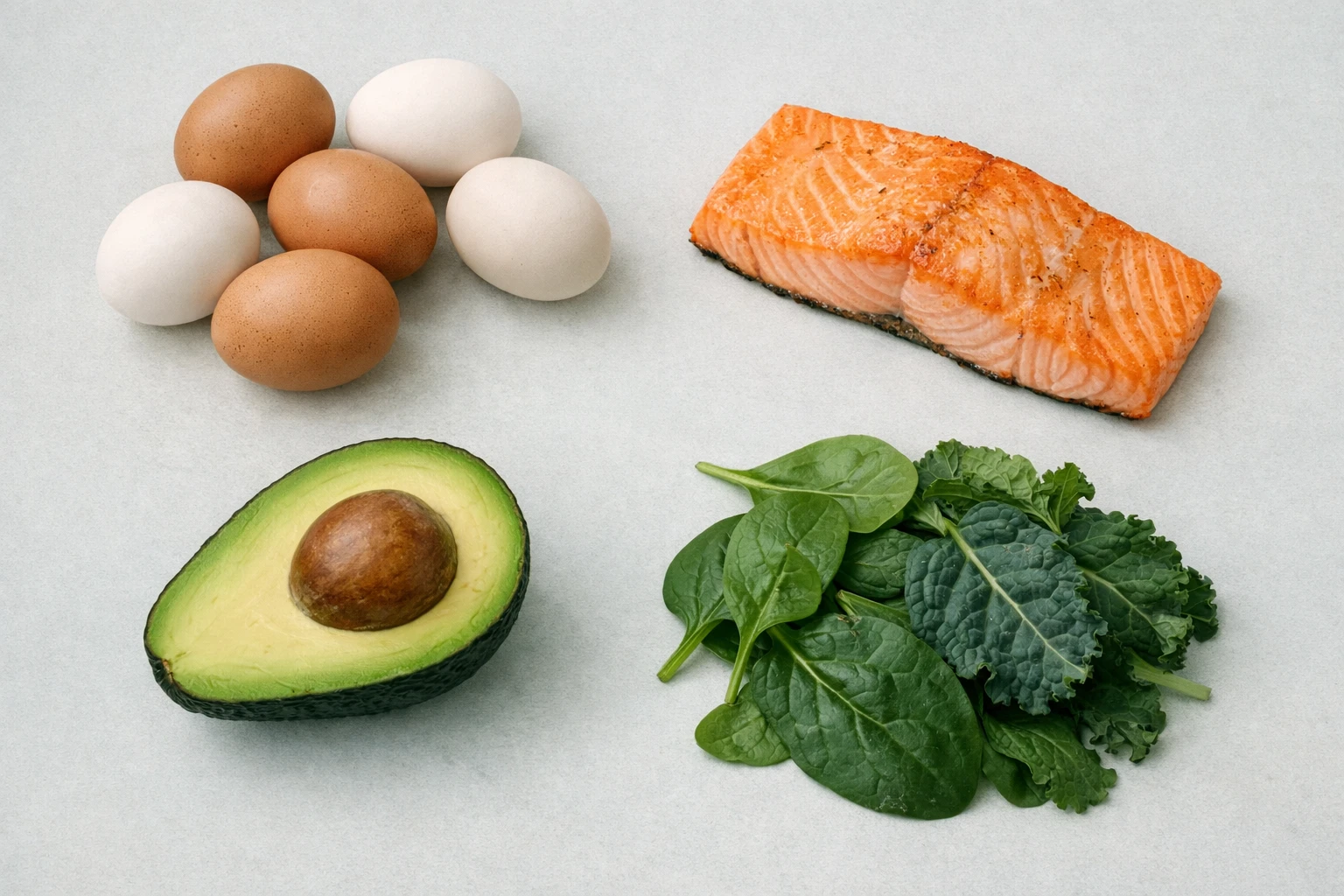
- Build meals on protein-dense anchors (eggs, fish, poultry, tofu) rather than fat-dense ones, and let the fat come along with them rather than leading.
- On vegetarian keto, lean on eggs, dairy protein, soy, nuts and seeds, and watch lysine specifically.
- Electrolytes and fibre are the standard keto advice and they are good advice. They are not our lane, and we are not going to pad this page pretending otherwise.
Where AminoLens comes in
The per-food contribution breakdown is the useful view here: it shows how little each fat-dense item actually puts into your limiting line. A cheese-and-cream plate can read as a short bar next to a single egg, which is the kind of thing that is obvious in a picture and invisible in a macro total.
See where your own protein goes
One photo. All nine lines. The one that is holding the rest back.
Analyse a meal